Background and Context, Here’s the twist
The U.S. Department of Energy has closed a $1 billion loan with Constellation. The money backs the restart of the former Three Mile Island Unit 1, now the Crane Clean Energy Center, which has been offline since 2019, according to DOE and major outlets. Reuters and AP confirm the loan closure and the project’s scope. However, operations can’t resume until federal approvals are in hand.
What no one is mentioning: the rename signals a reset in narrative as much as engineering. Constellation is reviving a shuttered asset in a market that suddenly prizes firm, carbon-free power. And the federal government is explicitly tying that power to the nation’s data ambitions, according to DOE and Reuters.
Reactor Specifications and Capacity, You might be surprised that…
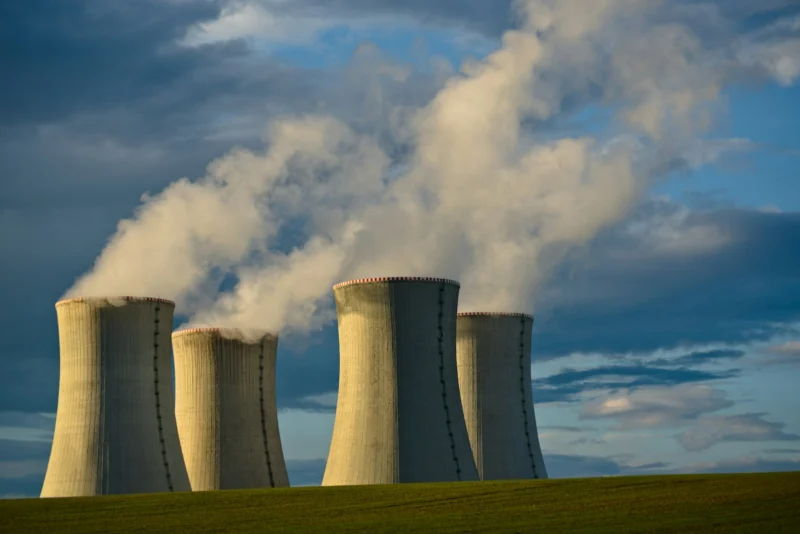
This is an 835 MW pressurized water reactor. That size translates to electricity for roughly 800,000 homes, according to DOE and AP. Moreover, it puts substantial zero-emission capacity back onto PJM’s grid footprint.
The numbers are straightforward but striking. An 835 MW restart materially shifts local supply, especially during peak demand. And it does so without adding new fossil emissions.
Historical Distinction and Shutdown Reasons, No, not that reactor
The unit coming back is not the one that partially melted down in 1979. That infamous unit, TMI-2, has been shut since the accident. Instead, Unit 1 ran for decades and was retired in 2019 for economic reasons, as AP, Reuters, and the Washington Post note.
That distinction matters. Public memory often collapses the site into a single story. But the engineering and safety history of Unit 1 is different from Unit 2’s accident record.
Microsoft Power Purchase Agreement, The anchor customer changes everything
Here’s the twist: Constellation has locked in a 20-year deal for Microsoft to buy the plant’s output. Reporters link the power to Microsoft’s growing data center needs and AI workloads. And that long-term buyer reduces price risk and underwrites the refurbishment case, according to Reuters, AP, the Washington Post, and the Wall Street Journal.
Terms were not publicly disclosed. Analysts have floated ballpark figures, but those are estimates. Still, the signal is clear: hyperscale demand is now a primary driver of firm clean power deals.
Restart Timeline and Regulatory Steps, 2027–2028 if approvals land
Constellation and federal reporting point to a 2027 or 2028 restart window. AP and Reuters cite 2027, while the Washington Post notes plans for 2028. However, the Nuclear Regulatory Commission must approve required actions before operations resume, according to DOE.
Additionally, the project depends on regional grid coordination. Reuters reports PJM expedited its grid-connection review to tighten the schedule. Even so, major nuclear workstreams rarely move without contingencies.
Loan Structure and Taxpayer Protections, A first for DOE’s LPO
This loan marks a procedural first for the DOE’s Loan Programs Office. Reuters reports LPO closed and funded the loan concurrently. Moreover, Constellation is guaranteeing the loan, a structure officials say is designed to protect taxpayers.
That’s a notable departure from past timelines and risk allocation. It suggests the agency is moving with unusual speed on nuclear. And it shows developers are taking more balance-sheet responsibility to unlock federal credit support.
Broader Nuclear Expansion and AI-Driven Demand, The bigger play
The deal isn’t just about one plant. DOE and Reuters frame it within a larger push to expand U.S. nuclear capacity. Importantly, LPO says it has more than $250 billion in lending authority available to support energy infrastructure, including nuclear.
AI is the accelerant. Data centers are scaling faster than regional grids can add firm, clean power. Consequently, long-life assets like nuclear are back in the portfolio for buyers who need around-the-clock output.
What no one is mentioning: this is market design as much as climate policy. When a hyperscaler locks in a 20-year strip, capital costs can drop. Therefore, more nuclear life extension and restarts could pencil out in regions facing tight capacity.
Still, nothing here guarantees smooth sailing. NRC approvals remain the gate for restart. And construction, supply chains, and outage risks can stretch timelines.
The upshot
If the restart lands in 2027–2028, Pennsylvania gets a major burst of clean, firm power. Microsoft hedges a chunk of its data center load with zero-emission electricity. And taxpayers gain an extra backstop via Constellation’s guarantee.
You might be surprised that a legacy plant is now an AI story. Yet the economics line up: long-duration demand meets long-duration assets. Consequently, nuclear’s comeback may run through corporate power deals as much as policy.
Here’s the twist to watch next: which utilities and hyperscalers pair up for the next restart or life extension. Because if financing and permits align, the pipeline could widen quickly. And that would reshape the grid mix faster than many expected.
Sources
- Reuters: US loans Constellation $1 billion for Three Mile Island reactor reboot
- AP: Energy Department loans $1B to help finance the restart of nuclear reactor on Three Mile Island
- The Washington Post: Trump officials give $1 billion loan to restart Three Mile Island
- U.S. Department of Energy: Energy Department Closes Loan to Restart Nuclear Power Plant in Pennsylvania
- The Wall Street Journal: U.S. Backs $1 Billion Loan to Restart the Three Mile Island Nuclear Plant
- TechCrunch: Trump DOE gives Microsoft partner $1B loan to restart Three Mile Island reactor